
10 Keys to Sell Products or Services on WhatsApp in 2026
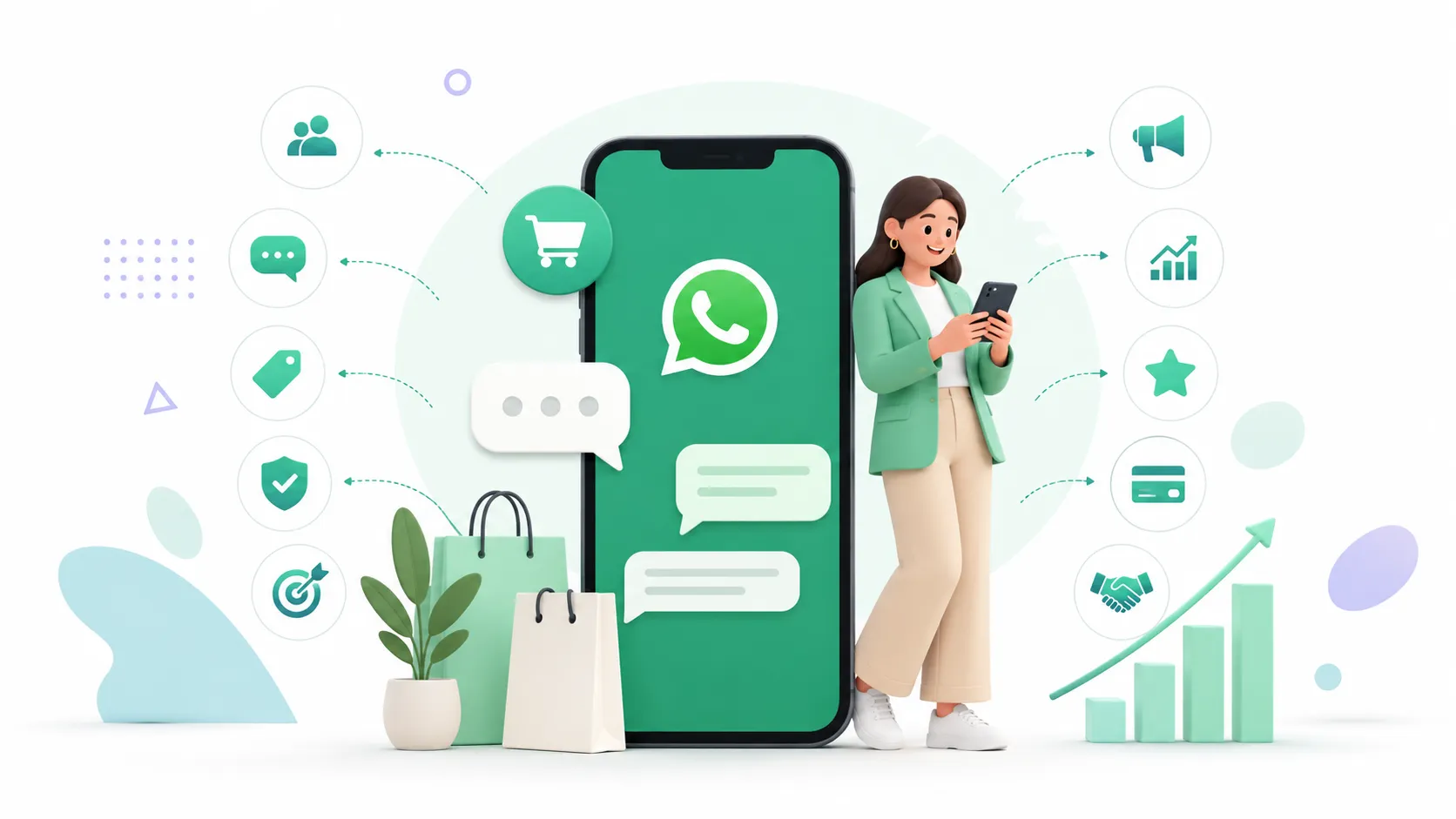
Conversational commerce (or c-commerce) has stopped being a simple customer support option to become the primary conversion engine for brands across all sectors. In today's digital marketing ecosystem, cold interactions through traditional forms are giving ground to the immediacy and closeness of instant messaging platforms. Knowing how to sell on WhatsApp in a professional and scalable way is no longer an added value, but an indispensable strategic requirement.
Heading into 2026, Meta's technological infrastructure has evolved significantly. WhatsApp not only enables sending text messages and voice notes; it has transformed into a true commercial operations hub with native payment processing, advanced conversational automation through artificial intelligence, two-way integration with CRM systems, and personalized transactional experiences. To turn your messaging channel into a highly profitable sales channel, it is necessary to abandon manual management and adopt a structured approach.
Below, we analyze in depth the 10 fundamental keys that will transform your sales strategy on WhatsApp during this year and how to apply them successfully to your business.
Table of Contents
- 1. Mastering Click-to-WhatsApp Campaigns and Meta Advertising
- 2. Implementation of Next-Generation Virtual Agents and Conversational AI
- 3. Direct Sales and In-App Catalog for Ecommerce
- 4. Deep Integration with CRM Systems and Omnichannel Strategy
- 5. Automation of Nurturing Flows and Cart Recovery
- 6. Personalization Based on Contextual Intelligence and GEO
- 7. Conversational Lead Magnets and Inbound Strategies
- 8. Defining SLAs and Optimizing Response Time
- 9. Regulatory Compliance, Meta Policies, and Account Health
- 10. Measuring Conversational KPIs and ROI Attribution
- How to Integrate WhatsApp into an Omnichannel Strategy in 2026
1. Mastering Click-to-WhatsApp Campaigns and Meta Advertising
The first step to generating a steady flow of qualified prospects is connecting the attraction phase directly with the conversation phase. Integrating direct interaction ads from Instagram and Facebook to WhatsApp has consolidated as the ad format with the highest immediate conversion rate.
When implementing advanced social media advertising strategies, the primary objective should be reducing friction. Meta advertising allows configuring ads that open a pre-filled chat with an initial message contextualized based on the advertised product or service. This eliminates the intermediate steps of traditional landing pages and allows prospect nurturing to begin at the exact moment of highest purchase intent.
Best practices for chat-start campaigns:
2. Implementation of Next-Generation Virtual Agents and Conversational AI
In 2026, rigid chatbots based on simple decision trees have become obsolete. Users demand fluid, contextual, and human-like responses. Integrating the WhatsApp Business API with Large Language Models (LLMs) allows creating virtual agents capable of interpreting search intent, tone, and the specific needs of each user.
An AI-powered conversational agent doesn't just answer frequently asked questions about schedules or prices; it can qualify prospects in real time, recommend catalog products based on user responses, and schedule appointments on the sales team's calendar without human intervention.
The key lies in establishing a clear handoff protocol: when a conversation reaches a high level of complexity or shows immediate purchase intent for a high-ticket item, the AI must seamlessly transfer the chat to a human sales executive, providing them with a prior summary of the interaction.
3. Direct Sales and In-App Catalog for Ecommerce
If you manage an online store, the purchasing experience within the WhatsApp app itself is one of the channels with the highest growth projection. Reducing the number of clicks between product discovery and transaction is the most effective way to boost conversion rates.
Through WhatsApp Business API and Meta Commerce Manager, companies can synchronize their product catalogs in real time. This allows users to browse collections, select variants (size, color, model), and add items to a native shopping cart right within the chat.
"Conversational commerce does not seek to drive users to your website, but to bring your business's checkout experience into the application where users already spend hours interacting every day."
Furthermore, integration with local and international payment gateways allows sending secure payment links or processing native payments in markets where the feature is enabled, completing the transaction without the customer leaving the conversation.
4. Deep Integration with CRM Systems and Omnichannel Strategy
Treating the company's WhatsApp account as an independent mobile phone managed by a single person is a common strategic mistake that hinders scalability. To sell on WhatsApp at scale, the platform must be fully integrated into the company's technological and digital marketing architecture.
Through the Official WhatsApp API (Cloud API), the platform connects directly with CRM systems like HubSpot, Salesforce, Zoho, or proprietary platforms. This allows:
5. Automation of Nurturing Flows and Cart Recovery
Not all users who start a conversation are ready to buy immediately. Likewise, many users on digital channels abandon purchasing processes halfway through. WhatsApp offers open rates over 90%, making it the most powerful channel for follow-up and reactivation sequences.
Unlike traditional email marketing strategies, follow-up messages on WhatsApp must be short, direct, and deliver immediate value. It is not about overwhelming the user with continuous promotions, but accompanying them in their decision-making process.
Essential automated flows in 2026:
Abandoned cart recovery: If a user adds products to their cart in the catalog or on the website but does not complete the payment, an automated message is triggered after 30 minutes offering help or resolving doubts about payment methods or shipping.
Post-inquiry nurturing: If a prospect requests a quote and does not respond within 48 hours, the system can send short educational content (such as a success story or an explanatory video) to reignite interest without sounding pushy.
Post-sale and customer loyalty: Sending order confirmations, real-time shipment tracking, and, days after delivery, an automated request for a review or a personalized offer for their next purchase.
6. Personalization Based on Contextual Intelligence and GEO
Personalization in 2026 goes far beyond adding the {Name} tag at the beginning of a message. The key to maximizing sales is contextual personalization. Users immediately detect when they are receiving a generic broadcast message, and the natural reaction is blocking or reporting spam.
To achieve a genuine connection, leverage data gathered through Generative Engine Optimization (GEO) and user search intent. If a customer reached your chat looking for a specific solution in a given geographic location, your message must reflect that immediate context.
Adapt offers based on browsing history, past purchases, average spend level, and in-chat behavior. A returning customer should be greeted acknowledging their journey with the brand, while a cold lead should receive a proposal focused on building trust before attempting a direct sale.
7. Conversational Lead Magnets and Inbound Strategies
Buying database phone number lists to send unsolicited messages is a direct recipe for failure and account suspension by Meta. Lead generation must be 100% inbound and have explicit user consent (Opt-in).
Conversational Lead Magnets are the most efficient tool for encouraging potential customers to take the initiative and message you. Instead of offering a downloadable PDF via email, invite users to receive exclusive content, a quick evaluation, or an assessment directly on their WhatsApp.
Examples of efficient inbound incentives:
8. Defining SLAs and Optimizing Response Time
In an instant messaging environment, speed is synonymous with conversion. Various industry studies confirm that the likelihood of closing a sale drops exponentially if the first response time exceeds 5 minutes.
High-performing organizations establish strict Service Level Agreements (SLAs) for their WhatsApp sales team. If the team is not available 24/7, it is vital to communicate this transparently and implement virtual assistants that capture the user's needs outside business hours, promising personalized assistance at the start of the workday.
Measuring First Response Time (FRT) and Average Resolution Time (ART) inside your team's dashboard will allow you to identify bottlenecks and optimize sales staffing during peak traffic hours.
9. Regulatory Compliance, Meta Policies, and Account Health
The sustained growth of your WhatsApp sales depends on the health of your business account. Meta enforces strict usage policies to prevent spam and protect the user experience across its social networks and messaging applications.
To avoid bans or severe restrictions on your corporate phone number, it is mandatory to comply with the following regulatory rules:
10. Measuring Conversational KPIs and ROI Attribution
What gets measured gets managed. Managing WhatsApp as a professional sales channel requires analyzing specific conversational metrics to evaluate real channel profitability and sales team effectiveness.
A comprehensive analytics strategy should monitor performance across three levels:
How to Integrate WhatsApp into an Omnichannel Strategy in 2026
WhatsApp should not operate in isolation. Its true potential is unlocked when it works in synergy with your company's other digital channels. A user might discover your brand through a Google search, visit your website, see a retargeting ad on Instagram, and finally close the purchase via a WhatsApp message.
To build a robust commercial architecture that drives company growth, having a comprehensive design is essential. An aligned plan allows efficient budget allocation, optimizes the user experience, and scales revenue predictably.
If you are looking to professionalize your sales channels and take your results to the next level, explore how to design a comprehensive digital marketing strategy tailored to the technological challenges of 2026. Combining quality traffic attraction, smart automation, and a team focused on conversational conversion guarantees a sustainable competitive advantage in today's market.